

Oulu charts a course for the future of Roma work
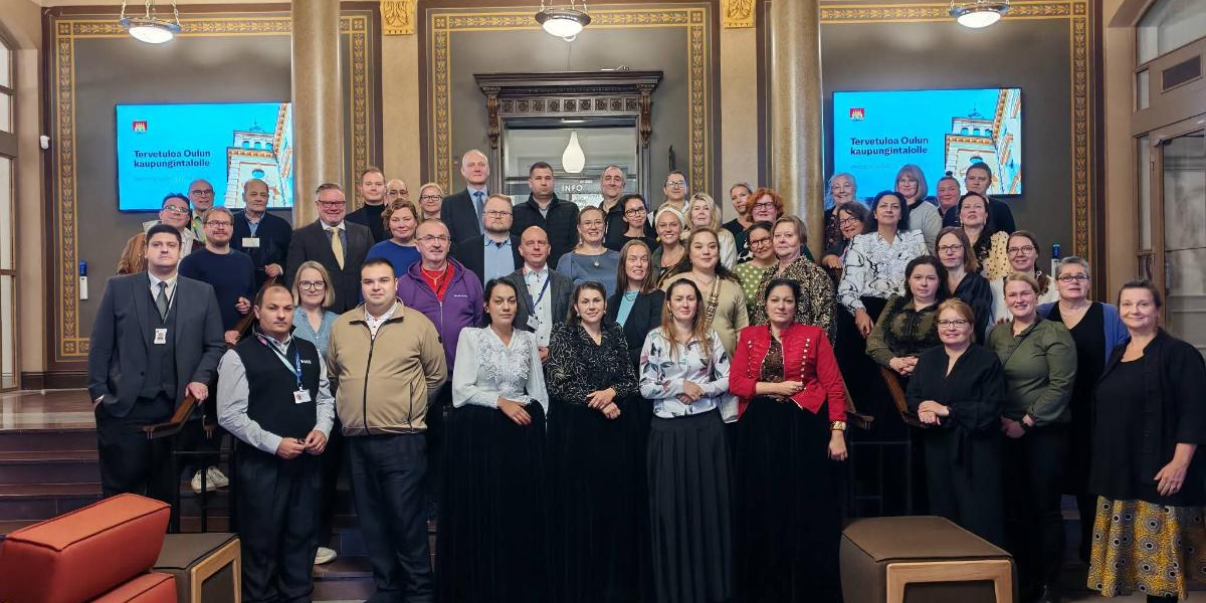
On 16–17 September 2026, people gathered in Oulu to discuss the current state and future of Roma work in Finland. Over the two days, participants discussed achievements in Roma work as well as current challenges.
The national consultation days of the Advisory Boards for Roma Affairs brought together public authorities, representatives of organisations, experts from municipalities and wellbeing services counties, education professionals and representatives of parishes.
Veli-Pekka Pelkonen, Development Teacher at Villa Victor and Chair of the Oulu Roma Working Group, considers the consultation days an important opportunity for people working in the field to meet and exchange views.
“The gathering provided a good overview of the current situation of Roma work across different sectors. There was a strong shared understanding that we need to work together and that Roma people themselves should be involved in creating and developing society from their own perspectives.”
Pelkonen also highlights positive developments, particularly in education.
“It was especially encouraging to see how much progress has been made, for example in education. Young people have also increasingly recognised the importance of education. In addition, the importance of the Romani language as part of a living Romani culture has been recognised.”
In his presentation, Pelkonen also raised the need to launch a truth and reconciliation process concerning the Roma, similar to the process concerning the Sámi. “This would create a clean foundation for genuine trust and cooperation,” he says.
Roma work in Oulu is based on cooperation
In Oulu, Roma work is carried out through broad cooperation between different sectors and organisations. Roma people themselves are also actively involved in the work.
Within the City of Oulu, Roma work involves the multicultural centre Villa Victor, which coordinates Roma work, as well as youth services, basic education, early childhood education, housing services and employment services. Cooperation partners include parishes, associations and organisations, educational institutions, projects focusing on Roma work, as well as public authorities such as Kela and the police.
The Oulu Roma Working Group coordinates the local implementation of the National Roma Policy Programme (ROMPO). In recent years, the main focus areas have included children and young people, education, housing, health and wellbeing, and services for older people.
“Different sectors have organised, for example camps for young people, training sessions and events for both Roma people and professionals working with Roma communities. Roma culture has also been made more visible to local residents through activities such as the Roma Café, coordinated by Villa Victor,” Pelkonen says.
Roma culture has also been highlighted on International Roma Day and this year at several events organised as part of Oulu’s European Capital of Culture year.