


Fruits of Collaboration

How can I use the materials?
Click open the topic that interests you from the drop-down menu below. Inside, you can find descriptions and more information about each topic. We have also collected some useful materials as pdf attachments which can be helpful if you decide to organise something similar in the future.
Some of the activities have been implemented as a broader collaboration between teaching staff and schools, others as projects between individual teachers and their teaching groups. Collaboration between schools that are far from the border has been done in digital format while collaboration between schools that are close to the border has been done through physical exchanges.
You can view the Aurora Entrepreneurialis schools on the map.
Themes and contents of collaboration
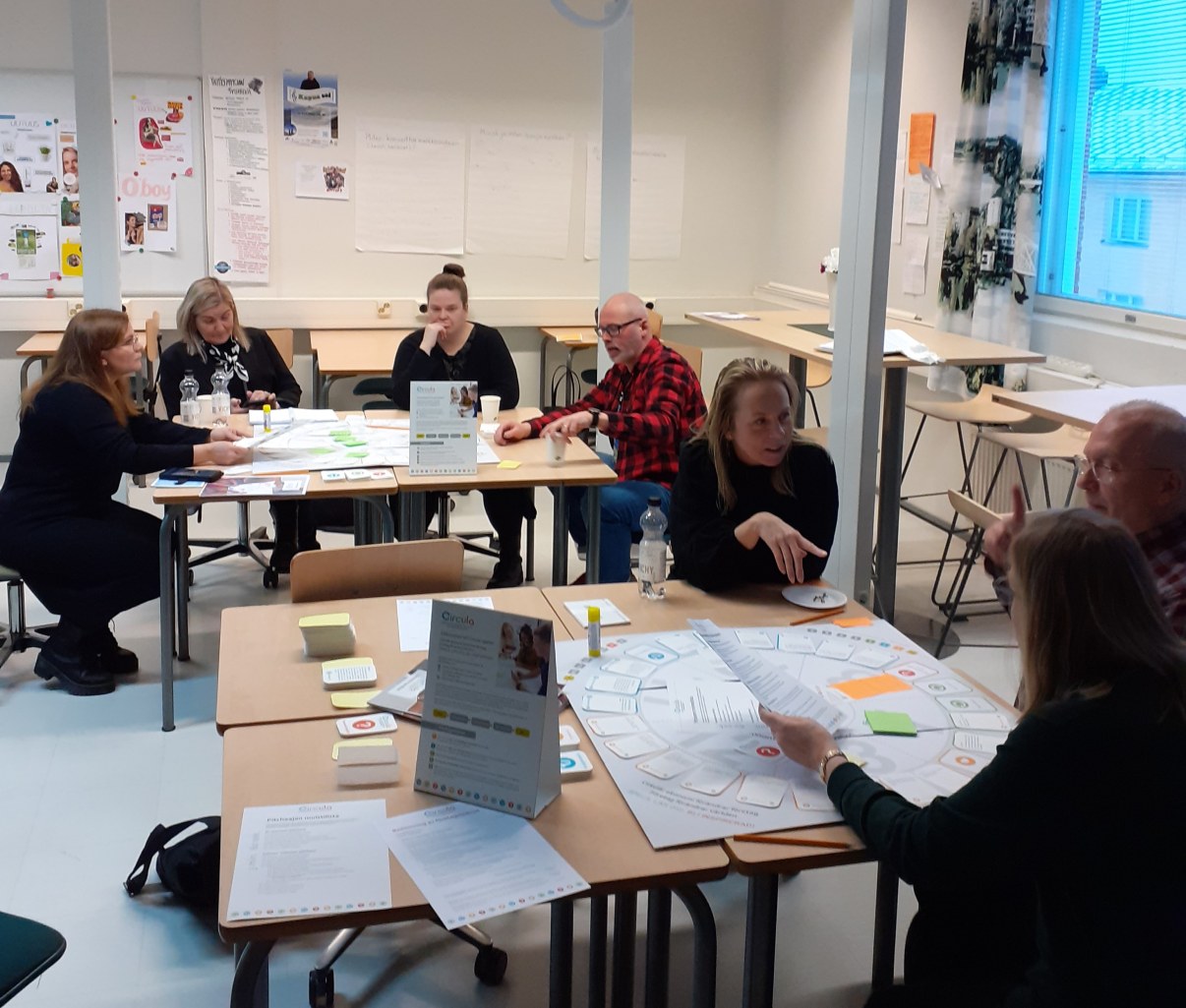
CIRCULA Game (sustainability, circular economy, entrepreneurship education)
CIRCULA Game and how to use it education
Content / Goals
To introduce and make the Circula Game familiar to teaching staff, so that they can use the game in their own teaching.
Subjects and study units
The participating teachers assessed that the game can be used, for example, in the following vocational education study units:
- Entrepreneurship and entrepreneurial activities, 1 competence point
- Working in a business, 15 competence points
- Promotion of sustainable development, 1 competence point
The game can also be used as a tool for team building and as part of suitable upper secondary school courses. The game can be used in primary and lower secondary education, for example, on a project day or MOK (multidisciplinary learning modules) week.
Participants
Lappia Vocational College, Tornio campus: business teaching staff and an entrepreneurship expert
Tornedalsskolan, Haparanda: upper secondary school teachers
Tornion yhteislyseon lukio: upper secondary school teachers
A total of eight people participated in the training session.
Duration / time resources
4 hours
Materials required
Circula Game, game leader, space that fits multiple tables.
Form of implementation / platforms
Working face-to-face in small groups.
What we learned
Game-based working was a good way to get to know other teachers from different schools better. The activity was also judged to be suitable, for example, as part of an individual school's employee wellbeing day.
It was easy for the participating teachers to get to know the game itself as there was a skilled game leader present from the Aurora Entrepreneurialis project. The game leader guided the flow of the game with a power point presentation.
ICT and entrepreneurship education
Building a digital online shop
Content / Goals
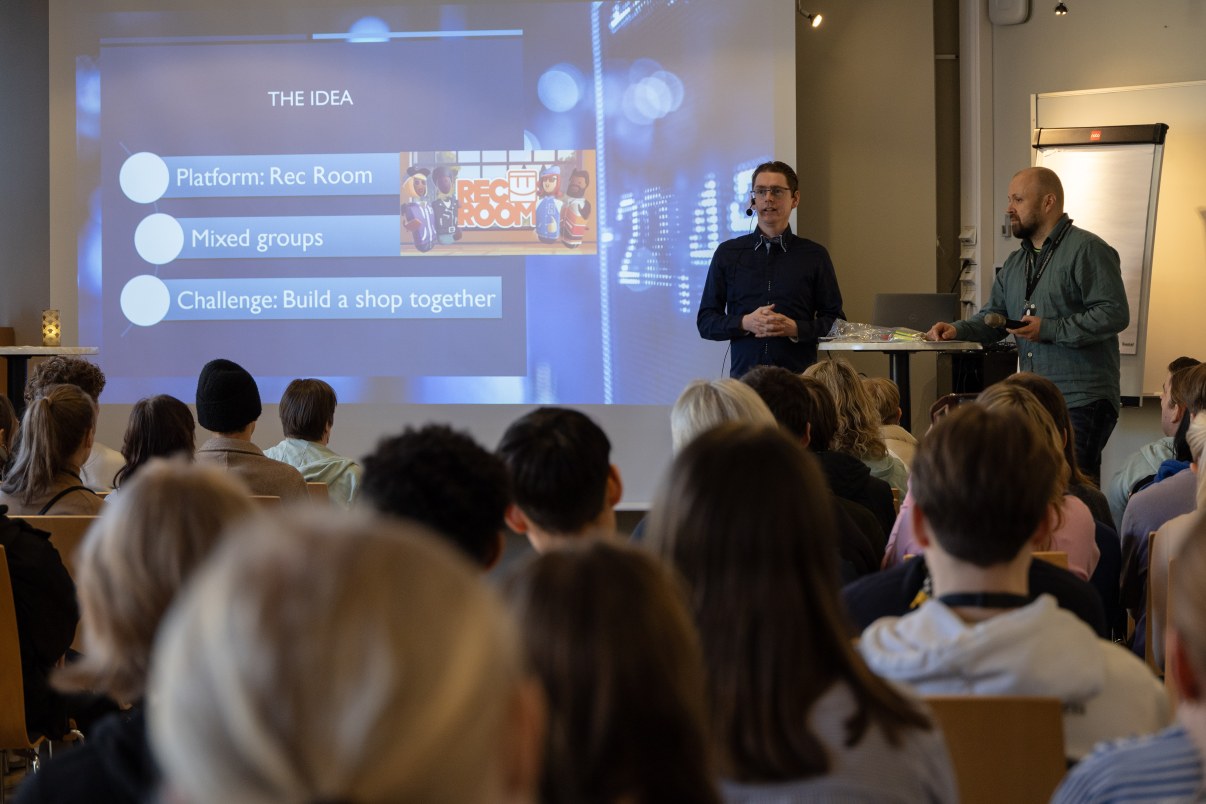
An international collaborative project for students in a virtual environment based on a "shop creation competition". Each mixed group created their own version of the online shop. The working language was English.
Subjects and study units
Year as an Entrepreneur course in Business Administration program (Swedish upper secondary school)
ICT vocational upper secondary qualification (Finnish vocational institution)
Participants
Lappia Vocational College (Kemi): 1 teacher+ 8 students (1st year)
Strömbackaskolan (Piteå): 1 teacher + 17 students
Duration / time resources
6h for preparation, 4h for the creation competition itself (student collaboration)
Materials required
Computer, good internet connection, headset (VR glasses if possible)
Form of implementation / platforms
Rec Room Tool (online tool)
Virtual Shop Competition video
English (ENA3) and entrepreneurship education
Cultural appropriation and appropriate use of culture in business
Content / Goals
Collaborative activity about cultural appropriation and the appropriate use of culture in business. Through the activity, students gain an understanding of the concept of cultural appropriation, encounter examples of cultural appropriation and practice reflecting on how culture can be used in business in a sustainable way.
Subjects and study units
ENA3 English study unit (Finnish upper secondary school)
Year as an Entrepreneur (Junior Achievement) entrepreneurship course (Swedish upper secondary school)
Participants
Haukipudas Upper Secondary School (Oulu): 4 students / 1 teacher (ENA3)
Strömbackanskolan (Piteå): 4 students / 2 teacher (Year as an Entrepreneur)
Duration / time resources
60-75 minutes (+ 60 minutes of individual preparation for students)
Materials required
Laptop for each student, Miro account for the facilitor;
pre-assignment (article) and vocabulary
Form of implementation / platforms
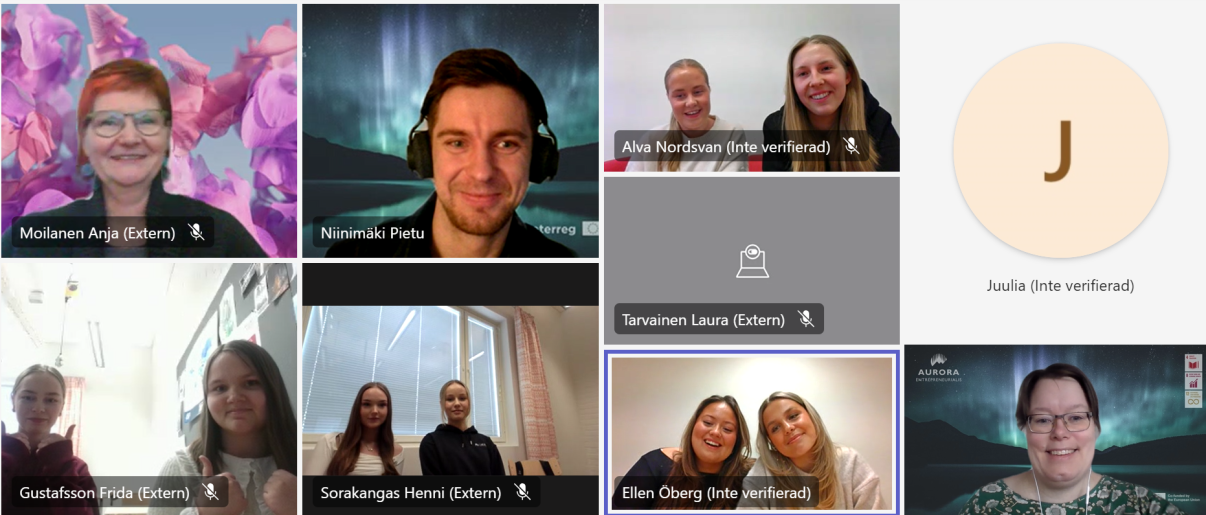
- Microsoft Teams for online meeting
- Miro platform, View Miro -template
Swedish (RU15) and entrepreneurship education
Swedish in working life, entrepreneurship skills, working life skills
Content / Goals
Learning activity on entrepreneurial skills and work life. Through this activity, students learn what entrepreneurial competencies are (according to the CRITIC model developed by Mats Westerberg). During the activity, students evaluate their own skills within this framework and plan which skills they want to develop in the future and how.
Learning objectives:
- Participants understand what entrepreneurial competencies are (according to the CRITIC model developed by Mats Westerberg)
- Participants can reflect on their own entrepreneurial competencies
- Participants' teamwork skills are improved
- Participants' Swedish language work-related vocabulary is enhanced within the themes of the learning activity
Subjects and study units
- RU15 Swedish study unit (Finnish upper secondary school)
- Year as an Entrepreneur (Junior Achievement) entrepreneurship course (Swedish upper secondary school)
Participants
Strömbackaskolan Piteå: 3 students / 1 teacher (JA-Year entrepreneurship course teacher)
Haukipudas Upper Secondary School: 3 students / 1 teacher (RU15 Swedish language teacher)
Total participants: 8
Duration / time resources
60-75 minutes (+ an independent pre-task about 60 minutes)
Materials required
- Laptop for each participant
- Miro account for the facilitator
- Microsoft account and Microsoft Teams for the facilitator
- A classroom or smaller meeting rooms
Form of implementation / platforms
- Microsoft Teams for online meetings
- Miro for facilitating collaboration, view Miro board template
Entrepreneurial Competencies by Mats Westerberg (in Swedish with subtitles in Finnish, Swedish or English)
Cross-border company visits
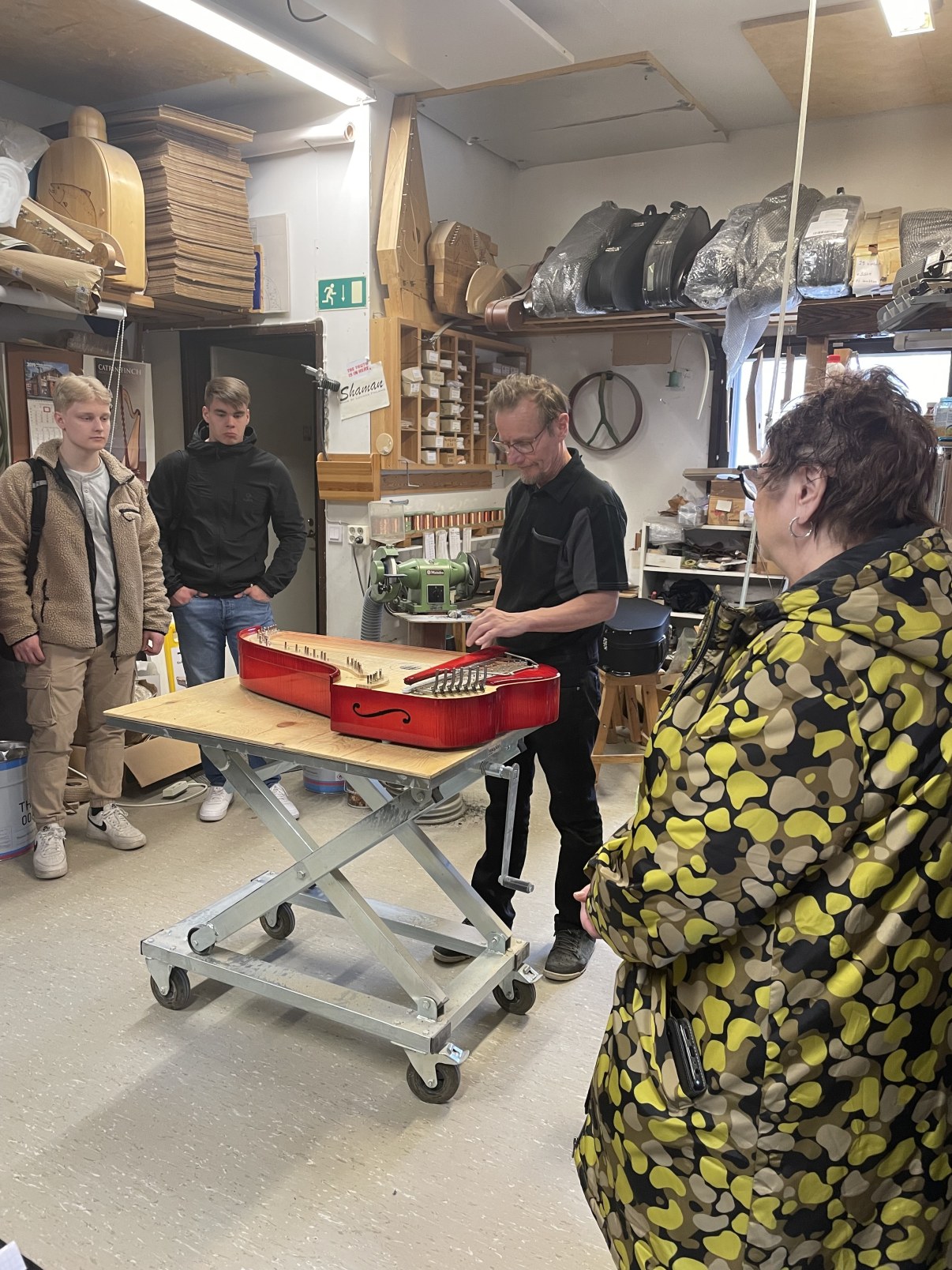
Students and teachers from Gränsälvsgymnasiet Övertorneå & Ylitornion Yhteiskoulun Lukio worked together for one day and visited local entrepreneurs from both sides of the border to learn about how four different companies works with social, environmental, economic, and cultural sustainability and entrepreneurship in the Torne Valley around Övertorneå and Ylitornio. The four companies were: R Automatic (robotics), hotel and tourism company Lapland View Lodge on the Swedish side, craftsman Pekka Lovikka who creates the musical instruments kantele and YBT Oy (concrete) on the Finnish side.
The teachers and students started with some teambuilding, the students worked together ahead of and during the visits and they visited both schools during the day as well. The students worked in mixed groups and prepared questions for the companies related to sustainability and working life themes.
Cultural Walk
Description
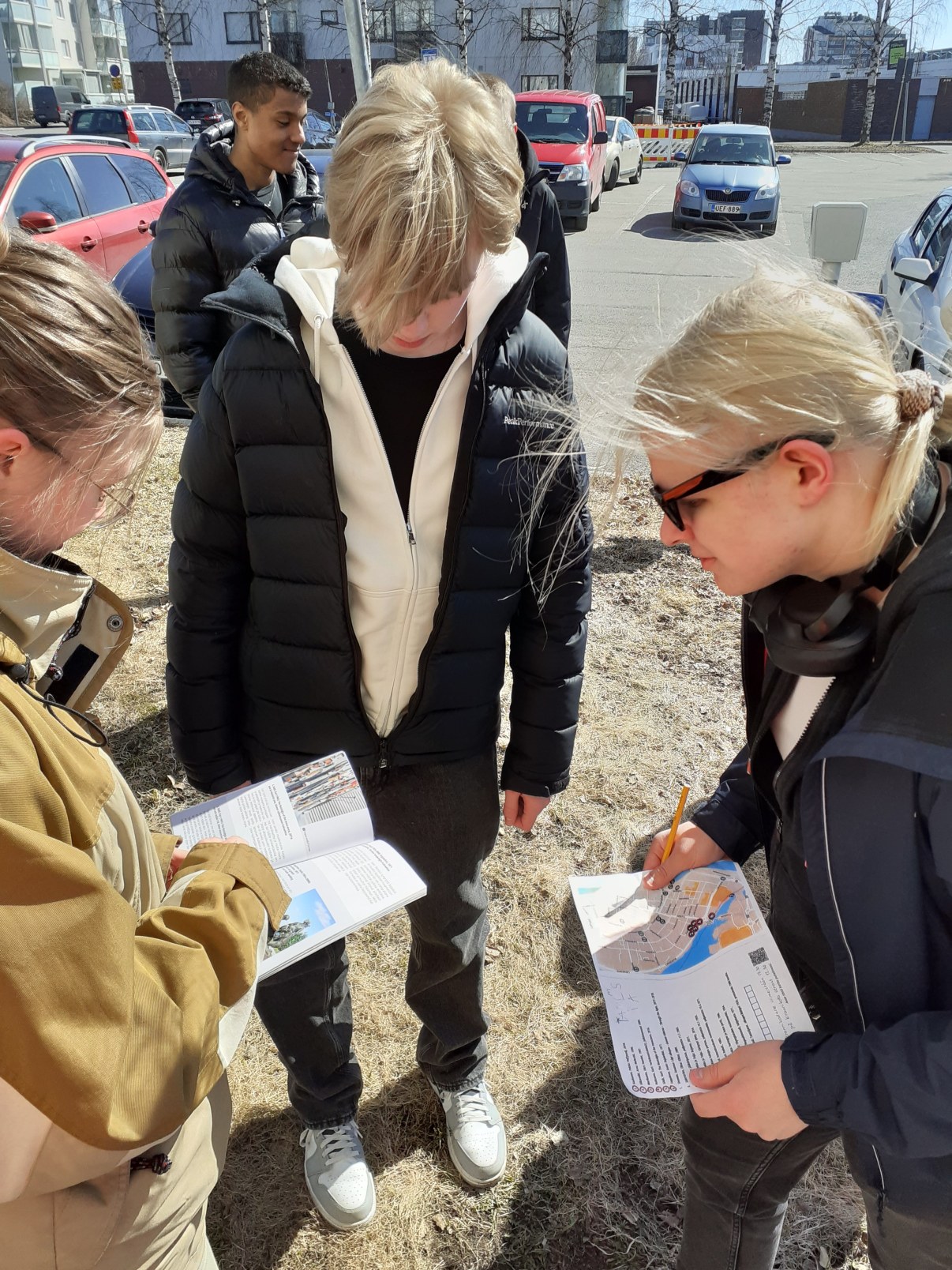
Students walked around in mixed groups and visited local cultural sites and statues. They had the task to navigate to each location with a map. At each location, students had to answer questions related to the site. 3 schools participated the event: Vocational College Lappia, Tornedalsskolan Haparanda and Tornion Yhteislyseon lukio. The event was an extracurricular activity but the concept can be applied to many different school subjects, such as history, social sciences, languages, art.
Learning goals
- Getting to know each other
- Develop teamwork skills
- Develop language skills (English and Swedish)
- Learn about local art and history
Activity structure
- Students gathered in the same outdoors location. The lead teacher handed out written instructions to the students and divided them into mixed groups (each group had students from different schools).
- Each group received a paper map, which had the Cultural Walk stations marked on it.
- Students walked together in groups to find the different locations. At each station, there was a teacher who gave the students a QR-code. With the QR-code, the students received a question about the cultural site or statue at the location. After answering the question correctly, the group would receive one letter and with all the correct answers, they could form a word with those letters.
- The teams who manage to create the correct word with all the letters enter a raffle to win a prize at the end of the event.
Business Challenge Clinic
Description
An online session where students with student companies (part of the JA year programme) from Björknäsgymnasiet Boden defined business challenges that they were facing in their company. Students from Oulun normaalikoulun lukio familiarised themselves with the student companies and the challenges. During the online session, the owners of the student companies worked in mixed small groups with Norssi students to brainstorm and develop innovative solutions. The session was facilitated on Microsoft Teams and student groups used Miro for collaborating.
School subjects and course
The collaboration activity was incorporated into the JA year as entrepreneur -course in Björknäsgymnasiet Boden. In Oulun normaalikoulun lukio, the session was an extracurricular activity with voluntary attendance. Students received a certificate of attendance that could be used for example in offering proof of experience in international student activities or entrepreneurial activities.
Participants
18 students
2 teachers (Björknäsgymnasiet Boden)
Duration / time resources
60-75 minutes (+ 60 minutes of individual preparation for students)
Materials required
Laptop for each student, Miro account for the facilitor, Microsoft account for facilitator
Form of implementation / platforms
- Microsoft Teams for online meeting
- Miro platform, view Miro -template from the session
Green Industry study visit
Description
A learning activity between two upper secondary school classes was built around the theme of green industry in Boden. Students in Boden visited the local greenhouse and did a casework in groups as part of their environmental sustainability and energy course. Students from Oulunsalo interviewed the students from Boden during an online session to learn more about the topic and reflect on sustainability topics.
Learning goals
Through the activity, students:
- gain knowledge of sustainability topics and renewable energy
- learn multicultural skills, English language skills, presentation skills, teamwork skills, as well as tolerance for ambiguity.
The activity can be modified and applied between any two groups of students/youth and which includes a study visit to a local organization working with sustainability topics.
School subject and course
• Environmental sustainability and energy (Swedish upper secondary school)
• Biology 3 (BI03) – Human influence on ecosystems (Finnish upper secondary school)
Participants
Björknäsgymnasiet Boden: 28 students (full class) / 2 teachers
Oulunsalo high school: 29 students (full class) / 1 teacher