

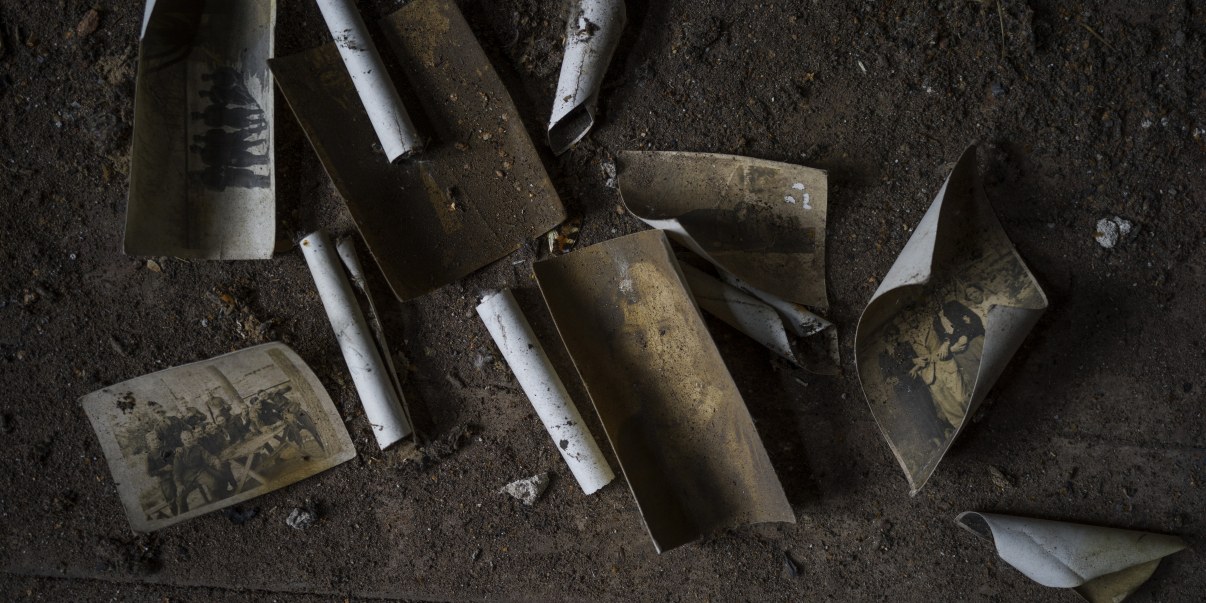
The Punished without a Crime exhibition opening in Tiima is about people who did not meet societal expectations
An exhibition about the forgotten history of Finnish workhouses will open in October 2026 in the Museum and Science Centre Tiima. The Oulu Museum organizes the exhibition in cooperation with Historian Katariina Parhi and Photographer Vesa Ranta.
What is the punishment for someone who has already lived a hard life?
Workhouses operated in Finland from the 1920s to the 1980s as part of social welfare and societal control. Workhouses were closed facilities where people were stationed without official sentencing – people accused of poverty, homelessness, substance abuse, or ‘inappropriate’ lifestyles were forced into these workhouses.
Labor at workhouses was mandatory, the rhythm of life was heavily regulated, and freedoms were limited. The exhibition especially focuses on the life and memories of residents and staff of the Ruukki Workhouse (later known as Pohjola Workhouse) in Siikajoki. It also considers wider questions of power, morality, individual freedom, and societally acceptable lifestyles at any given time.
The study shines light on the dark sides of the early welfare state
Researcher and senior lecturer of criminology Katariina Parhi, PhD, has examined the Finnish workhouses as a part of the developing welfare state’s widely accepted dark side. The workhouses were used to intervene in crimes before they even happened.
“The history of workhouses is a story of the loss of individual liberty and a highly regulated Finland. It shows how society has, at different times, defined who are accepted and who need discipline, control, and incarceration. The subject is very topical in modern societal dialogue as well”, Parhi explains.
The exhibition combines research data with oral tradition, items, photographs, and videos. The material has been compiled through historical research, but also by encountering people who have personal or inherited memories of the workhouses.
“We wanted to build the exhibition with the people. During our interviews, we gained access to human experiences and details that archived materials cannot reach: we learned about the buildings of the Ruukki Workhouse, everyday routes, worksites, and the rhythm of life”, Oulu Museum’s Project Manager Karoliina Autere explains.
Tiima’s exhibition ties the stories into local history
Punished without a Crime opens in October of 2026 in the Oulu Museum and Science Centre Tiima in Myllytulli. It is the Oulu Museum’s first touring exhibition. It will be available until October 3, 2027.
“The Oulu Museum’s exhibitions discuss the city’s and the area’s history from multiple perspectives. We want to highlight experiences and groups that are often forgotten by history. Punished without a Crime suits this theme perfectly. It highlights silenced history and voices that are not often heard”, Autere says.
The exhibition is part of a larger entirety that also includes Parhi and Ranta’s non-fiction book Rikoksetta rangaistut – sopeutumattomat Suomen työlaitoksissa (Siltala, 2026) and the exhibition organized in the Finnish Labour Museum Werstas in Tampere between April 30, 2026 – September 20, 2026. The exhibition in Tiima reinforces the topic by connecting it to the Oulu region’s history and explaining the workhouse system through local experiences, items, participatory interviews, and new photographs and video materials.
Punished without a Crime exhibition is part of the official Oulu2026 European Capital of Culture programme. The following organizations have supported the exhibition’s realization: Oulu Culture Foundation, Finnish Association of Science Editors and Journalists, Arts Promotion Centre Finland, and Finnish Heritage Agency.